Tag: english

  • Reverse osmosis with very hard water: strengths and special cases

    Reverse osmosis is a drastic water treatment, in fact osmotic membranes have the ability to remove up to 96% of the substances dissolved in water.

    It is a treatment that removes most of the dissolved salts, and intervenes effectively where the water is extremely rich in salts and there is a need to reduce them, whether they are harmful or simply in abundance.

    Where the presence of nitrates is high, the treatment with reverse osmosis is indicated, as it is indicated in areas where the PFAS rise

    Where the water is very hard due to the presence of calcium or magnesium carbonates, treating the water with reverse osmosis makes sense to meet the needs of drinking light.

    Be careful not to consider the homogeneous abatement capacity, which is capable of reducing all substances by the same percentage. Osmotic membranes do not always have the ability to stop all the substances dissolved in the water, one of those that “pierce” is the co2 present in the water in the form of carbonic acid

    A special case for reasoning

    We have recently been contacted by an installer with a particular case.

    The osmotic water was weakly sparkling. Having ascertained that there were no co2 addition systems downstream, we asked for the value of the inlet conductivity of the water. 1600 micro Siemens with a hardness over 50 ° F

    The mystery was soon explained, the membranes discard the carbonates and not the carbonic acid, where the water is rich in carbonates and is also rich in carbonic acid which is nothing but CO2 in solution in the water. In fact, it is the presence of carbonic acid that prevents limestone from precipitating, and if the carbonic acid evaporates, the limestone precipitates.

    In some cases the phenomenon is perceived with a metallic / bitter taste, in extreme cases, as a weak carbonation. When measuring the pH of the permeate, a very low value must be read (often below what is required by the legislation (pH 6.5), we will write later on the subject, this is an indication of the presence of Co2 in the water

    How to solve the problem

    By adjusting the mixing valve it is possible to mitigate the unpleasant perception, where this adjustment is not possible or sufficient it is necessary to “buffer” the presence of carbonic acid, using a filter with dolomitic calcite. We recommend that you insert an ultrafiltration to protect yourself from the risk of bacterial load.

    Very hard water, however, tends to ruin the treatment systems in an anticipated manner.

    The electromechanical and mechanical parts of a direct production osmosis plant suffer the wear and tear of time in an anticipated manner if it does not intervene with an effective pre-treatment. The use of filters to inhibit the precipitation of limestone upstream of the system are highly recommended.
  • Reverse osmosis systems with direct production, some construction choices

    In the domestic environment, the need of water treated with osmosis without accumulation has led to the development of direct production plants. The water is treated at the moment without accumulation. The choice of project must take into account various aspects linked to each other.

    • The effectiveness
    • The duration in time
    • System costs
    • Operating costs

    Finding the right balance point is not so obvious

    Membranes in series or in parallel?

    In the past, it was common to put the membranes in series. The waste from the first membrane was sent to the second, with the advantage of saving water. But the water saving was not sufficient to justify replacing the last membrane with a high frequency. This is because the wasted water left a large amount of deposit on the last membrane. The clogging of the membranes created: poor performances, a regulation of the conductivity that was not easy and the duration of the consumable parts was limited in time.

    Even using three membranes, of which the last received the waste of the first two, did not resolve the issues, (even if the production of permeate was much higher)

    The membranes in parallel meet the requirement of working in a homogeneous way, with the replacement of both in the same period.

    Today are used 1812 or 2012 membranes, their duration depends on the use, the quality of the incoming water and the construction choices. Membranes must always remain as much as possible without surface deposit. To work well and last over time, the membrane is “water hungry”. A ratio of 1 to 2, i.e. one liter of permeate every two discarded, is the threshold beyond which it is good not to go.

    The operating pressure that regulates the flow rate cannot exceed for two reasons: if we slow down the waste, the deposits increase, and at the same time we strain the system components, the vessels

    Single membrane or two membranes in parallel?

    Today the plants work with membranes for a capacity that varies between 300 and 400 GPD (4bar 20 ° C), with an hourly production that varies between 90 and 110 liters per hour (always in the absence of recirculation).

    The difference between the use of a single membrane 3012 of 300, 400 or even 500 GPD and the pair of two membranes of 150-200 GPD lies in two factors: the surface of the closure cap of the vessel and the internal flow rate.

    At 9 bar the thrust on the cap of the 1812 is about 190 kg while at the same pressure the thrust on the cap of the 3012 is more than double 420 kg. The component is much more stressed and at risk of breaking.

    Another aspect that should not be underestimated is the internal speed of the water on the membrane, it is inversely proportional to the square of the radius. The more the diameter increases, the slower the water flows. In membranes 3012, the operating pressure cannot be pushed upwards and at the same time the concentrated waste ratio must drop to ensure a sufficient speed for surface self-cleaning. The more membranes increase in diameter, the more they are ‘hungry for water’ for the same production.

  • New UV LED technology in our dispensers

    New UV LED technology in our dispensers

    What is it about?

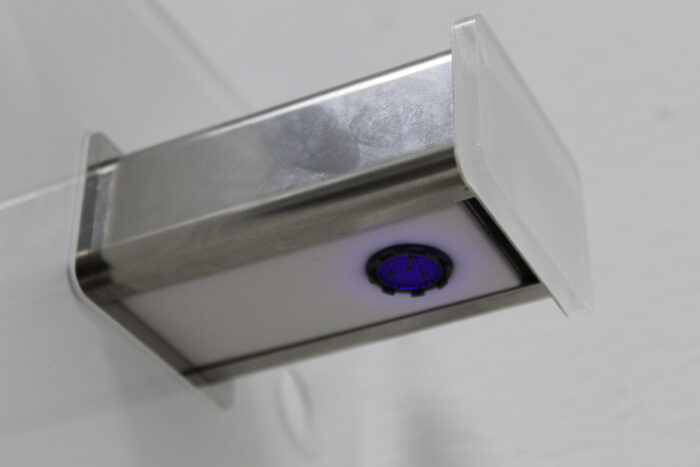
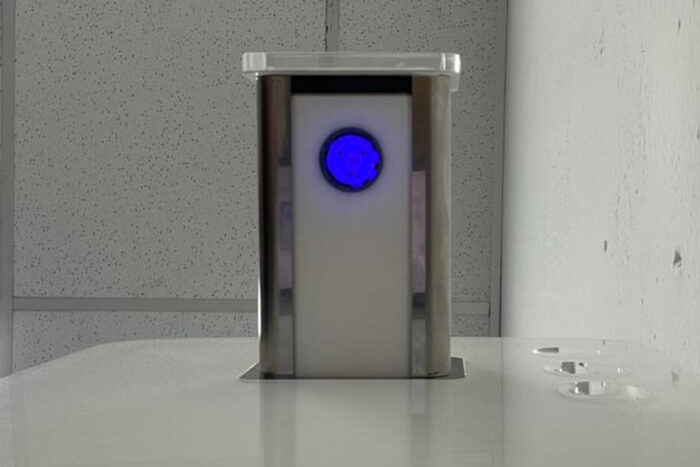
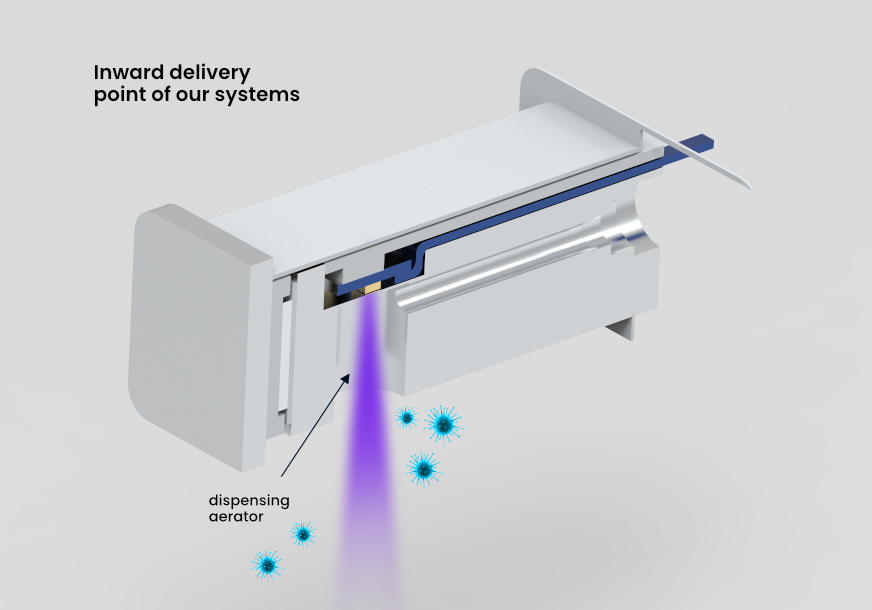
    The dispensing point on our systems can be optionally arranged with a LED installed inside a PTFE (food grade Teflon) dispensing block.

    This LED plate provides bacteriostatic UV radiation which protects the water from bacterial contamination and prevents retro contamination within the hydraulic circuit of the system.

    Why choose this technology?

    • No alteration of water taste
    • Bacteriostatic action pinpointed in critical points of system
    • High efficiency and very low power consumption
    • No heating of treated water
    • Instant ignition and effectiveness
    • Environmental compatibility (absence of toxic substances and heavy metals in the components)

    For technical information and costs, please refer to our sales department – [email protected]

  • Water crisis, opportunities for drinking water treatment

    Water crisis, opportunities for drinking water treatment

    it hasn’t rained for months, drought brings problems everywhere, in nature, in agriculture, in human life and even in drinking water.

    The lack of water leads to a lower standard in the drinking water quality supplied at the point of use. When water resources are low, they are forced to access resources of lower quality and tap water suffers. To be precise, water is always drinkable, but  its quality and especially its organoleptic quality decreases.

    How drought affects the quality of drinking water

    The lack of water leads the need for collections where the groundwater level is lower, with an increase in turbidity and in the silt present.

    Water shortage leads to the use of water resources that require greater chlorination, the water is not very pleasant to the palate and the formation of disinfection by-products.

    The lack of water together with high temperatures lead to algal growth, which is perceived with the smell of stale. It is nothing more than an algal florescence with the presence of cyanobacteria, harmless, but a producer of geosmin.

    Treatment at the point of use can significantly improve the organoleptic quality of home water

    Mechanical fine membrane filtration systems, such as 0.5 micron pre-coat filters, stop much of the silt and at the same time are not subject to clogging.

    The carbon block candle filters suffer a lot from the silt present in summer waters and especially in periods of drought. Those declared 0.5 micron if they do not clog in presence of silt it is because the manufacturer declares what is convenient for him and nobody checks … From direct experience, with carbon block filters, in the presence of silt the occlusion is rapid and sure. In the past we did a test with Made in USA filters declared 1 micron: it’s been a disaster, they occluded quickly.

    Carbon filters are great for removing chlorine and its compounds.

    The removal of cyanobacteria, should be associated with an antibacterial action, the use of silver filters is strongly recommended.

    Reverse osmosis and water shortage

    The reduction of available water resources could put the use of a system that has to discard water to produce treated water in a bad light. But in the end it is a false problem, modern direct production plants have a waste rate of 1 to 2/3, i.e. for every liter of osmotic water, between 2 to 3   liters are discarded, which is certainly not a great damage in the domestic economy in the use of water resources.

    Osmosis is also an excellent filtration system which in some cases is necessary to have good and healthy drinking water.

    Water cooling

    A slightly different case are the cold and sparkling water dispensers with the water-cooled refrigeration circuit. These systems are generally used when the sink is narrow and the refrigerator circuit does not breathe. These very efficient systems in cold periods tend to be large consumers of water in summer as the cooling water enters at already high temperatures and therefore significantly increases the amount of water consumed. (in some extreme cases we measured a consumption of over 150 liters of water per day for cooling only). In these cases it is good to evaluate the issue of traditional air systems, perhaps those evolved with static condenser, silent and with low heating.

    Global warming and environmental destruction: reducing unnecessary consumption reducing unnecessary production

    The use of zero-km water, even if it’s a small step is a contribution to the environment, means less production, less pollution, less global warming. Using point-of-use treatment systems to improve home water quality helps twice. You drink better and consume less, all for the benefit of our planet.